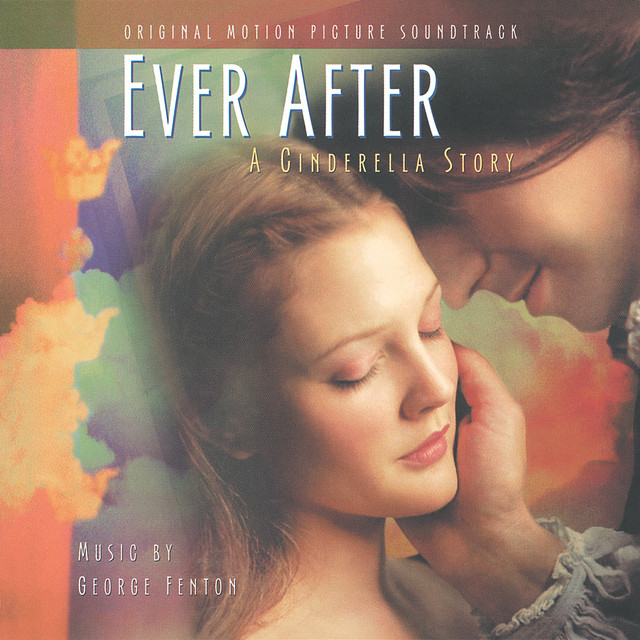
I’ve never seen Ever After, the 1998 film directed by Andy Tennant which stars Drew Barrymore, Anjelica Huston and Dougray Scott in what purports to be a “realistic” telling of the story of Cinderella, treating the traditional fairy-tale as a piece of historical fiction. It’s quite striking to read the reviews of the film written at the time, almost three decades later – every one I open seems to be a variant on “I wasn’t expecting to like this – but it’s nothing like I thought it would be – it’s really good.” Perhaps I should see it after all!
The film was actually very successful at the time, and launched a partnership between director Tennant and composer George Fenton which produced some very fine music over the years to come, even if none of the films ever reached quite the same critical heights as this one. And I can say with absolute certainty that while I may have never seen the film, I’ve listened to its music more times than I could ever count – it’s just wonderful.

Sadly we never got to hear Fenton score a traditional fantasy film – and while Ever After isn’t really one of them either (eschewing that side of the Cinderella fairy-tale) this does give us a tantalising glimpse of what one may have sounded like – densely packed with themes in the grand romantic orchestral tradition, the score is a true delight.
The composer wastes no time in presenting us with a soaring version of the score’s main theme, right there to start the opening title piece – with all the grace of an elegant ballgown, it rises to majestically – and before the piece ends, we get treated to the beautiful secondary theme, initially more tentative (but there are plenty of opportunities to hear it in more rousing form down the line).
It’s not all pretty romance though, and that’s what makes the score such a joy: there are many feathers to its bow. The second cue “Cinderella” is surprisingly full of action/suspense music which is pulled off with typical aplomb before the third major theme is introduced in the cue’s second half, this one full of historical pomp and regality.
Sprinkled throughout the score are the most wonderful fanfares and flourishes – dashing heroism and pageantry taking its place amongst everything else. My favourite example is probably the wonderful “Rescuing Maurice” (it has a similar feel to the more rambunctious portions of Michael Kamen’s The Three Musketeers) though it is run close by the cue that immediately precedes it, “The Girls, The Prince and the Painting” which is just about guaranteed to bring a smile to anyone’s face
I’m not sure I’ve ever heard a bad word about Ever After’s music – and really, it’s hard to imagine how anyone who loves 20th century film music could not fall for its magnificent charms. It’s got tremendous themes, beautifully-constructed set-pieces, it’s vivid and colourful and charming and – really, what more could you ask!? From the beautiful opening all the way through its epic, stunning finale “Happily Ever After” (a piece which more than lives up to its name) it is just a joy.
Reply