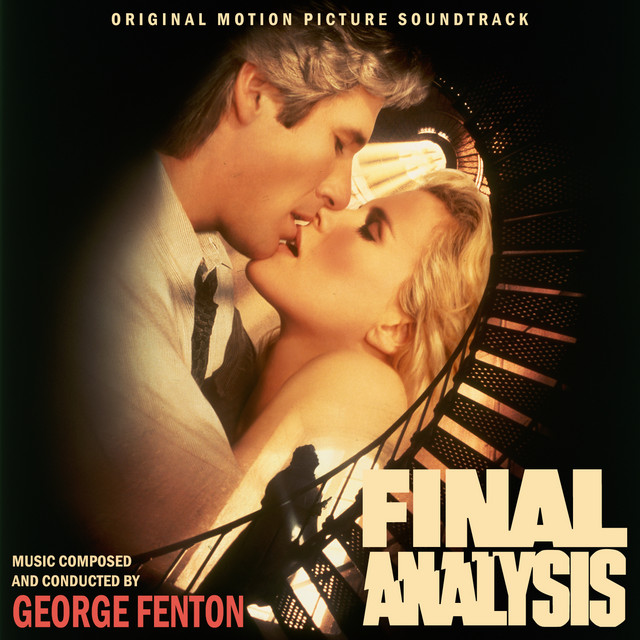
Erotic thrillers were all the rage in Hollywood when Final Analysis came out in 1992. It may not be as famous today as the year’s most notorious one, Basic Instinct, but it did good business at the time, capitalising on the star power of Richard Gere and Kim Basinger as a psychiatrist and femme fatale respectively.
The film was the first collaboration between director Phil Joanou and composer George Fenton. It was an interesting choice of composer: Fenton was just embarking on a more Hollywood-centric phase in his career, having spent much of his time to that point scoring British films, and mostly prestige dramas, and would have been far from the first person you’d have thought of for this sort of film.

Joanou’s film is very much an homage to Alfred Hitchcock (in particular Vertigo) and that is precisely where Fenton drew his inspiration from: his deliciously Herrmannesque score is in fact by far the best thing about the film. It starts with a wonderfully menacing opening title piece, a grand and imposing main theme emerging for staccato brass over general orchestral tumult. It’s not a style of music this composer got to explore very frequently and Final Analysis suggests that is a real pity.
Perhaps more typical of him is the score’s primary love theme, which reaches its pinnacle in the gorgeous “The Day Lighthouse”. The composer infuses it with an unmistakable hint of film noir in the great tradition, and demonstrates huge skill in conveying the underlying treachery sitting just beneath the outward romance. Another beautifully attractive cue is “The Tea Room”, which has some arrestingly elegant writing for harp and a string quartet as well as some shimmering strings.
The most notable feature here however is the action material, much of which is based on variants on that terrific main theme. The brief album’s last four cues (which together make up more than a third of its run time) play out as one long action sequence, culminating in “The Night Lighthouse”, an explosive rollercoaster of a cue with brilliantly satisfying outbursts from the brass section (and one last Herrmannesque flourish for the final bar).
Final Analysis is not a typical George Fenton score but it’s one where he managed to bring his usual great class onto a film which didn’t necessarily earn it and it awarded him the opportunity to flex his muscles on something very different. It’s a terrific album back from the days they usually only lasted just over half an hour and serves as a great example of his underrated versatility.
Leave a Reply