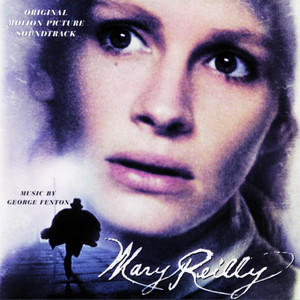
Directed by Stephen Frears, 1996’s Mary Reilly starred Julia Roberts in the title role where she played the maid to Dr Henry Jekyll, played by John Malkovich – the two develop a romantic relationship, but she is repulsed by a certain Edward Hyde (also played – massive spoiler alert – by Malkovich). The film was a box office disaster despite reuniting much of the talent behind Dangerous Liaisons, many reports at the time suggesting that the two lead actors completely hated one another.
One of the key returning talents from Dangerous Liaisons was its composer George Fenton, but it’s a different one of his classic scores of the 1980s that comes immediately to mind when listening to Mary Reilly – The Company of Wolves, a rare foray into the horror genre for the composer. This score is very much cut from the same cloth, frequently highlighting twin violins (played so beautifully by Janice Graham and Lucia Lin) atop the mighty London Symphony Orchestra.

Gothic romantic horror is very much the order of the day in the gorgeous score – but it’s very carefully crafted to suggest fog-bound landscapes and city streets of the Victorian age, the composer generally creating great dramatic theatrics through subtle, psychological methods. This results in an intriguing score which is not particularly “showy” but demands attention all the same: and to explore it is to uncover a truly gorgeous piece of work, which reminds me somewhat of Bernard Herrmann’s extraordinary The Ghost and Mrs Muir.
The twin violins presumably intend to convey that Dr Jekyll and Mr Hyde are two sides of the same coin and the atmosphere created is sublime: introduced in the opening “The House of Henry Jekyll”, the outstanding main theme dominates much of the score. Fenton gets so much from it – the romantic relationship between Mary and Henry, the tumultuous one between Mary and Edward and of course the enigma of Henry and Edward.
While that theme gets through a lot of mileage (the elegant spookiness of “It Comes In Like the Tide” is outstanding; and Fenton gives it a truly magnificent arrangement for the end title cue) there is plenty else going on. A secondary theme is introduced in “The Birth of Hyde” and then developed further in “The Announcement” and has such a beautifully tragic quality to it. The score never goes fully into what you might think of as typical gothic horror territory but Fenton does manage to conjure tumult of a more psychological kind in cues such as “Mary’s Errand” and in particular the brilliant “Mary Meets Hyde”, where in one moment the violins find themselves battling with a single brassy outburst from the orchestra which is so effective.
There’s such a nervous energy palpable in “The Shopping Trip”, the score’s angriest piece, for once the composer allowing the simmering tension to really bubble over through the whole orchestra. The lengthy “Haffinger’s” seems like it’s the real emotional payoff of the thing, but still to come is “The Transformation”, when the full tragedy of the story is revealed to Mary and Fenton approaches it with something of an epic sweep, fully reinforcing her horror.
This is a smart, elegant piece of work which will not appeal to everyone (some will consider it to be too restrained, but I think if you pay a little attention you will notice just how much is going on) and I think it’s nothing short of masterful. No, it doesn’t feature individual pieces which will bring the house down in a concert like Fenton’s most popular works, but as a whole it is a stunningly effective piece of dramatic writing which is so vividly evocative.
Leave a Reply